How to Transfer a Car Lease in Ontario (2026): A Toronto Guide
Transferring a car lease in Ontario is a legal process that allows you to hand off your lease obligations to another driver, or take over someone else’s. In Toronto, where parking, insurance, and monthly costs add up fast, a lease transfer is often the most practical way to get out of a car you no longer need—or into one without a long dealer commitment. This guide walks you through the exact steps, the real costs, and the paperwork involved for a lease transfer in Ontario in 2026.
What Is a Lease Transfer and Who Is It For?
A lease transfer, sometimes called a lease assumption, is a legal agreement where the original lessee (you) assigns the remaining term of the lease to a new lessee (the buyer). The new driver takes over the monthly payments and the responsibility for the vehicle until the lease term ends. The original lessee is usually released from liability, though some lenders keep you on the hook if the new driver defaults—more on that later.
This process is ideal for a few specific situations:
- You have 6 to 24 months left on a lease and need a larger or smaller vehicle.
- You’re relocating outside Ontario and don’t want to ship the car.
- You can no longer afford the monthly payment and want to avoid a costly early termination penalty.
- You want to take over a lease with low payments without paying dealer markup on a new lease.
For Toronto drivers, the math often works in your favor. Taking over a lease means you skip the freight, PDI, and dealer admin fees that come with a new lease. You’re just stepping into someone else’s payment schedule.
Lease Transfer vs. Lease Buyout: Which One Makes Sense?
Before you commit to a transfer, you need to know the difference between transferring the lease and buying out the vehicle. They are not the same thing, and the choice affects your finances and your credit.
| Factor | Lease Transfer | Lease Buyout |
|---|---|---|
| Ownership | You never own the car; you return it at lease end. | You purchase the car and own it outright. |
| Monthly payments | Continue at the same rate as the original lease. | Stop; you finance the residual value instead. |
| Upfront cost | Usually a transfer fee ($300–$800) plus any cash incentive. | Residual value plus taxes, often $15,000–$30,000. |
| Credit impact | New lessee’s credit is checked; original lessee may remain liable. | New loan application; original lease is closed. |
| Best for | Short-term needs or lower monthly payments. | Long-term ownership without dealer markup. |
If you’re in Toronto and only need a car for 12 months, a transfer is almost always the better play. If you plan to keep the car for five more years, a buyout might be worth the higher upfront cost.
Step-by-Step: How to Transfer a Car Lease in Ontario
Here is the process you’ll follow, whether you’re the person giving up the lease or the one taking it over. The steps are the same for both sides, just from opposite ends.
Step 1: Confirm Your Lease Allows Transfers
Not all leases are transferable. Some lenders, especially on luxury or low-volume vehicles, prohibit transfers entirely. Check your original lease agreement or call the leasing company’s customer service line. Ask specifically: “Is this lease assumable by a third party?” If the answer is no, you’re stuck with either a buyout or an early termination.
Step 2: Get a Lease Buyout Quote and Payoff Amount
You’ll need the current buyout amount, the residual value at lease end, and the exact number of payments remaining. This information is on your monthly statement or available through the lender’s online portal. Write these numbers down; you’ll need them for the transfer application and for any negotiation with the new lessee.
Step 3: Find a Qualified Taker
You can find someone through word of mouth, classifieds, or a dedicated lease takeover marketplace. A marketplace like Car Lease Canada lets you list your lease for free and connect directly with interested drivers across Ontario. When you find a candidate, they’ll need to meet the lender’s credit requirements, which usually means a credit score of 650 or higher and a gross income that’s at least three times the monthly payment.
Step 4: Submit the Transfer Application
The lender will require a formal application from the new lessee. This includes a credit check, proof of income, and a copy of their Ontario driver’s licence. The application fee—usually between $300 and $800—is typically paid by the new lessee, but you can negotiate who covers it. The lender takes 7 to 14 business days to review the application.
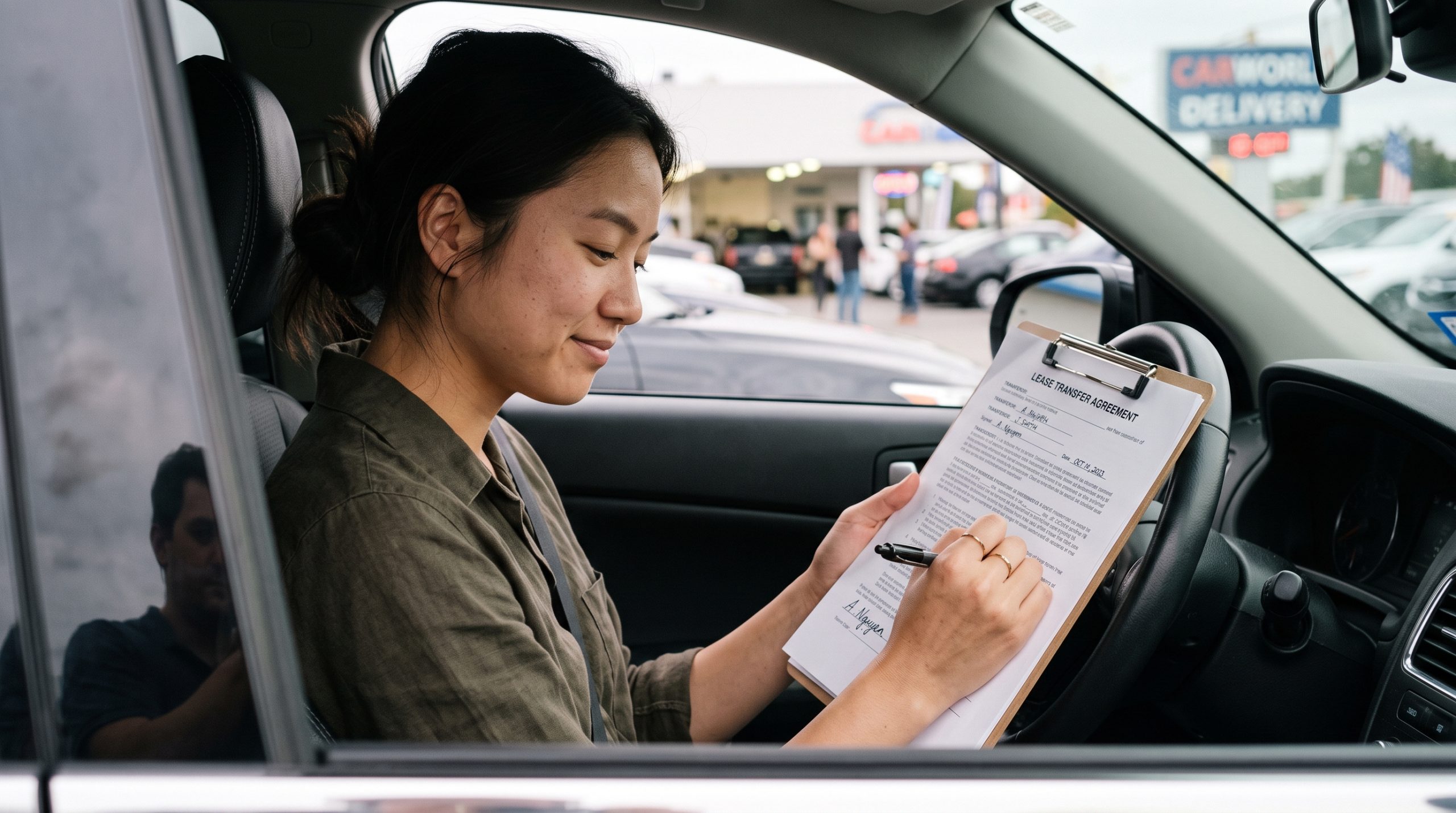
Step 5: Sign the Transfer Agreement
Once approved, both parties sign the lease transfer agreement. Read the fine print carefully. Some lenders include a clause that holds the original lessee liable if the new lessee misses payments. If that clause is present, you have two options: walk away from the deal or require the new lessee to provide a security deposit. In Ontario, the lender cannot force you to remain liable without your written consent.
Step 6: Transfer Ownership and Insurance
After the paperwork is signed, the new lessee must register the vehicle in their name at ServiceOntario. You’ll need the used vehicle information package (UVIP), the signed transfer agreement, and proof of insurance. The new lessee also needs to update their insurance policy immediately—driving without valid insurance on a leased vehicle is a serious offence in Ontario.
Cost Breakdown: What You’ll Pay in Toronto
Money is the main reason people hesitate on lease transfers. Here’s the realistic cost picture for a transfer in Toronto in 2026.
- Lender transfer fee: $300–$800, paid by the new lessee or split between parties.
- Used vehicle information package (UVIP): $20–$25 from ServiceOntario.
- Registration and licence plate sticker: Around $60–$120 depending on your vehicle class.
- Insurance adjustment: Variable; Toronto rates are the highest in Ontario, often $200–$400 per month for a new driver.
- Incentive payments: Often the outgoing lessee pays the incoming driver $1,000–$3,000 to take over a lease with high payments or low mileage remaining.
If you’re taking over a lease, factor in the security deposit. Some lenders require one month’s payment as a deposit, refundable at lease end if the car is in good condition. Budget for that upfront.
Credit Checks and Approval Criteria
Lenders treat a lease transfer like a new credit application. The incoming lessee needs to prove they can handle the payments. In 2026, most Ontario lenders look for:
- A credit score of at least 650–700.
- A debt-to-income ratio below 40%.
- Two years of steady employment or verifiable self-employment income.
- A valid Ontario driver’s licence with no major infractions.
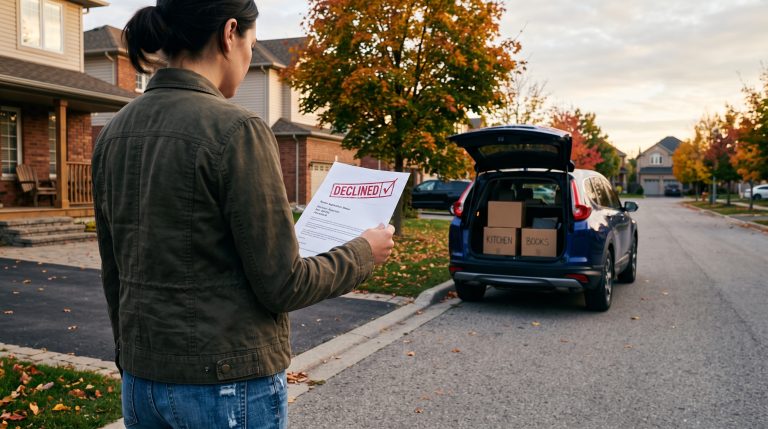
If the incoming lessee has a thin credit file or a recent bankruptcy, the transfer will likely be denied. You can try a co-signer, but many lenders don’t allow co-signers on lease transfers. It’s better to be upfront about credit history before paying the application fee.
Common Mistakes Toronto Drivers Make
People mess up lease transfers in predictable ways. Avoid these errors.
Skipping the Odometer and Condition Check
Toronto traffic means lots of stop-and-go driving, which wears brakes and tires faster than highway driving. Before you take over a lease, get an independent mechanical inspection. The cost is $150–$250, and it can save you from inheriting a car that needs $1,500 in repairs at lease return. Also verify the odometer reading against the lease agreement. If the original lessee exceeded the annual kilometre allowance, you’ll be charged for the overage at lease end.
Ignoring the Wear-and-Tear Clause
Lease contracts have a wear-and-tear standard. Scratches, dents, and stained upholstery can trigger charges at lease return. Have the vehicle inspected by a third party and document any existing damage with photos and a signed condition report. This protects both parties when the lease ends.
Not Reading the Liability Clause
Some lenders in Ontario require the original lessee to remain liable for the entire lease term even after a transfer. If the new lessee stops paying, the lender comes after you. If your lender insists on this clause, you have a few options: ask the new lessee for a larger security deposit, negotiate a shorter transfer term, or find a different lender’s lease to transfer. Never sign a transfer agreement without knowing exactly who is liable for what.
Taxes and Legal Considerations in Ontario
Ontario charges 13% HST on the monthly lease payment, which is already built into your payment schedule. When you transfer a lease, the HST treatment stays the same—the new lessee pays the same monthly amount, which includes HST. There’s no additional tax on the transfer itself, unless you’re paying a cash incentive. If the outgoing lessee pays the incoming driver to take over the lease, that payment is not taxable as income for the recipient.
One legal point: the lease transfer agreement must be in writing and signed by both parties. Verbal agreements are not enforceable in Ontario courts, and the lender won’t process a transfer without a signed document anyway. Keep a copy of everything, including the application, the approval letter, and the final transfer agreement.
What Happens at the End of the Transferred Lease?
When the lease term ends, the new lessee has the same options as the original lessee:
- Return the vehicle: Pay any excess wear-and-tear or kilometre charges and walk away.
- Buy the vehicle: Pay the residual value plus HST and own it outright.
- Trade it in: Use the residual value as a down payment on a new lease or purchase.
The original lessee has no say in this decision. Once the transfer is complete, they’re out of the picture—unless they signed a liability clause. If you’re the outgoing lessee and you want to protect yourself, require the new lessee to buy the car at lease end. That closes the loop and removes any chance of the lender coming back to you.
Frequently Asked Questions
Can I transfer a lease if I’m moving out of Ontario?
Yes. Ontario lease transfers are valid even if you relocate, as long as the new lessee lives in Ontario and meets the lender’s credit requirements. The vehicle must be registered in Ontario, so the new lessee needs an Ontario address.
How long does a lease transfer take in Ontario?
Most transfers take 7 to 14 business days from application to approval. The credit check is usually the bottleneck. If the lender is slow or the new lessee has a complex credit file, expect up to three weeks.
What if the new lessee damages the car?
If the original lessee signed a liability clause, they could be on the hook for damage beyond normal wear-and-tear. If the transfer is a full assignment—meaning the lender releases the original lessee—then the new lessee is solely responsible. Always confirm which type of transfer your lender offers before signing.
Next Steps: List Your Lease or Find a Takeover
If you’re ready to transfer your lease or take one over, start by gathering your lease documents and checking your credit. Then use a marketplace that lets you connect directly with other drivers. For Toronto residents, the local market is active year-round, but spring and summer see the most listings. List your lease free on Car Lease Canada and you can compare current takeovers across Ontario without paying a listing fee. The office is at 5 Richmond St W, Toronto, ON M5V 2C5, and you can reach the team at info@carleasecanada.ca or support@carleasecanada.ca, Monday to Friday, 9 AM to 6 PM EST.
Transferring a car lease in Ontario is a straightforward process if you follow the steps and read the paperwork. Know your costs, check the liability clause, and get everything in writing. Do that, and you’ll either be free of your lease or driving a car with payments that actually make sense for your budget.
Visit Car Lease Canada